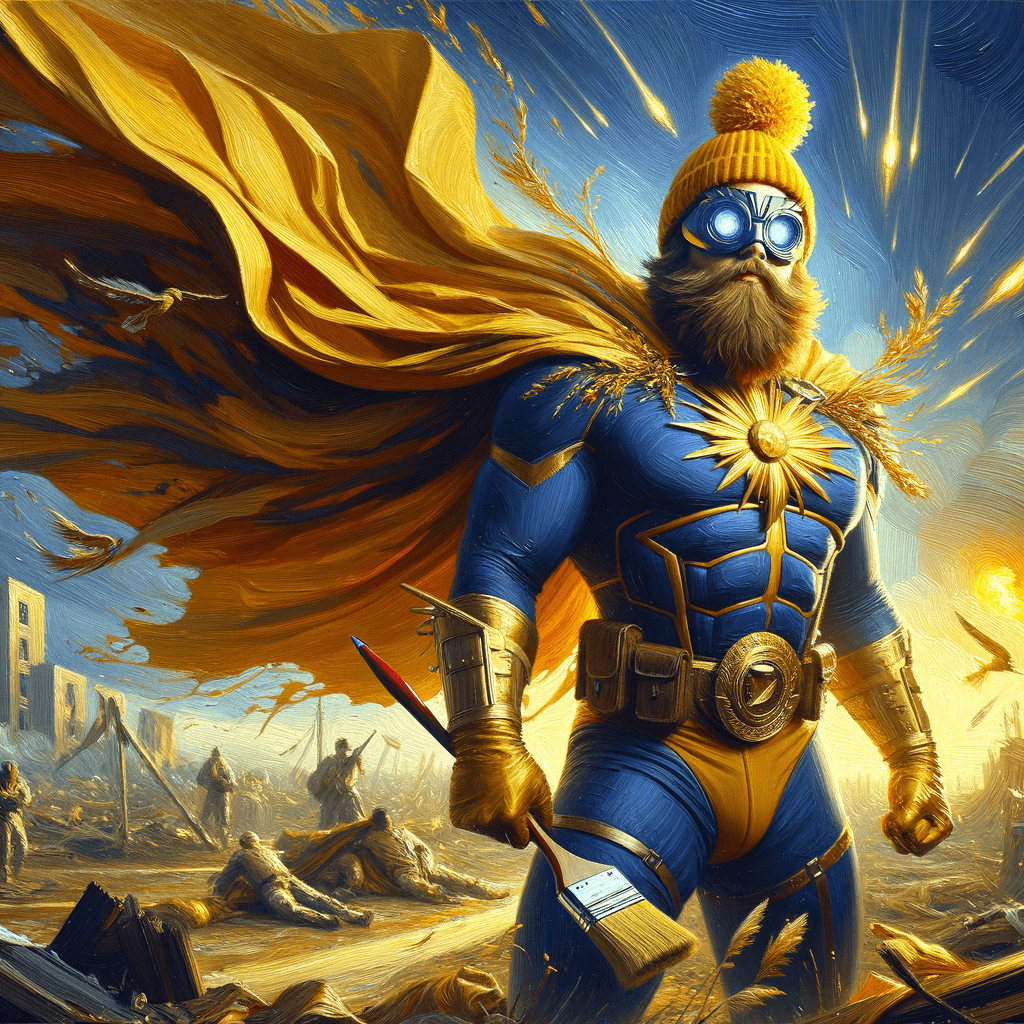
HeroForge: what happens when a fintech guy spends a weekend with Claude code
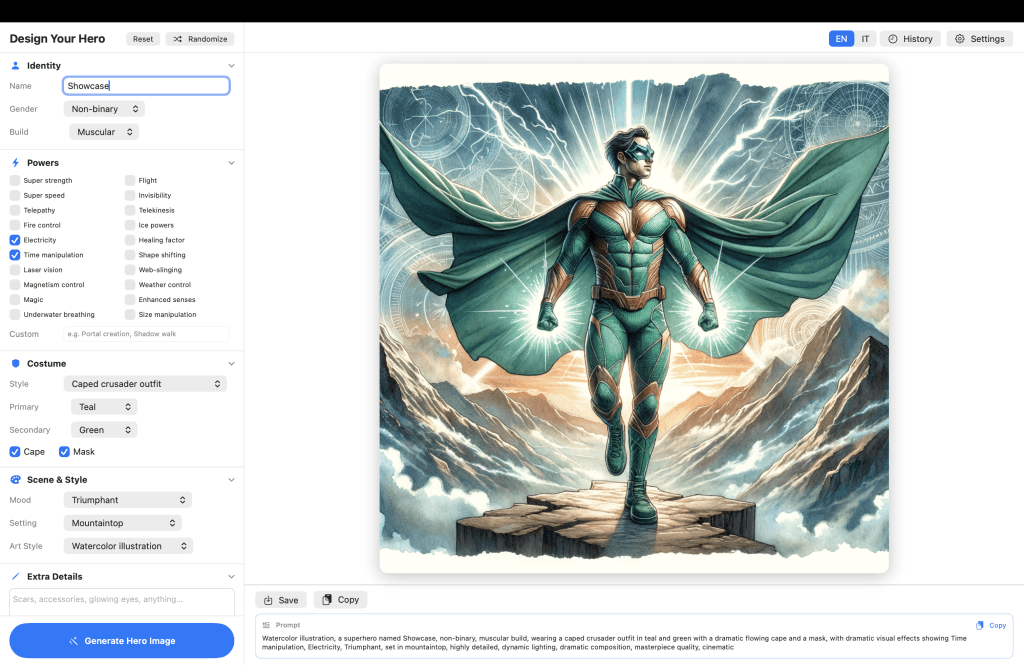
HeroForge is a native macOS app I built as a side project. The concept is simple: you design a superhero — name, powers, costume, mood, setting, art style — and the app generates a unique image using OpenAI’s DALL-E 3. No prompting expertise required. You fill a form, hit Generate, and watch something genuinely surprising appear on screen.
Why superhero images?
Honestly, because it’s joyful. Most of my professional work lives in the serious end of the technology spectrum — payments infrastructure, compliance frameworks, AI adoption in financial services. All important, all worthwhile. But there’s real value in building something purely because it’s fun, and because it teaches you something you wouldn’t learn in a boardroom.
Building HeroForge taught me more about prompt engineering, image generation models, and the practical limits of generative AI than any report or conference talk I’ve attended. When you’re the one deciding what goes into the prompt — and you see exactly how the model interprets costume colors, body types, and emotional tones — you develop an intuition for this technology that’s hard to get any other way.

I couldn’t build a Mac app two weeks ago
Here’s the part I find most interesting to reflect on. Fifteen days ago, I had zero experience building native macOS applications. No Swift, no SwiftUI, no Xcode project structure. Nothing.
HeroForge was built entirely using Claude Code — Anthropic’s AI coding assistant that works directly in the terminal. I described what I wanted, iterated on it conversationally, and Claude Code handled the implementation: the Swift codebase, the app bundle, the build scripts, the localization system, the persistent history, the DALL-E integration. I contributed product decisions, design direction, and the domain knowledge of what makes a good user experience. The code was written by AI.
This is not a small thing. The gap between “having an idea” and “shipping a working native app” used to require months of learning or a developer to hire. That gap is closing fast — and I think the implications for how products get built, especially in fintech and payments where custom tooling is everywhere, are significant.
I’m not claiming this replaces engineering expertise. It doesn’t. But it does mean that people who think in systems, understand user needs, and can articulate requirements precisely — which is most of what product and commercial roles in tech involve — can now close that gap themselves.
What I found interesting
A few things surprised me during the build:
- Specificity matters enormously. Vague instructions produce generic results. Precise, layered descriptions produce something that feels intentional. The same principle applies when thinking about AI in financial services — the quality of your input determines everything.
- Language shapes output. I added Italian localization, and not just for the UI — the prompt itself is generated in the selected language. The results differ in subtle but noticeable ways. Language carries cultural weight that models pick up.
- The cost is negligible, the barrier is the key. Each image costs roughly $0.08 via the DALL-E 3 API. The real friction is having an API key. This dynamic — low marginal cost, identity-gated access — is something I think about a lot in payments too.
Try it
HeroForge is free. It runs natively on macOS and uses your own OpenAI API key, so there are no subscriptions or middlemen.
→ https://heroforge.alessandrolongoni.com
If you build something with it, I’d genuinely like to see it.